You can run high-converting ad campaigns and write exceptional content, but if your website takes more than three seconds to load, over 53% of mobile visitors will leave before seeing your offer. In modern web development, site speed is not just an arbitrary technical metric—it directly determines your Google rankings, user experience, and revenue generation.
As a web developer and performance analyst at Pixel Engine Lab, I frequently audit client websites struggling with poor PageSpeed insights scores and failing Core Web Vitals. Here is a practical breakdown of what actually slows your site down and how to fix it to achieve sub-second loading speeds.
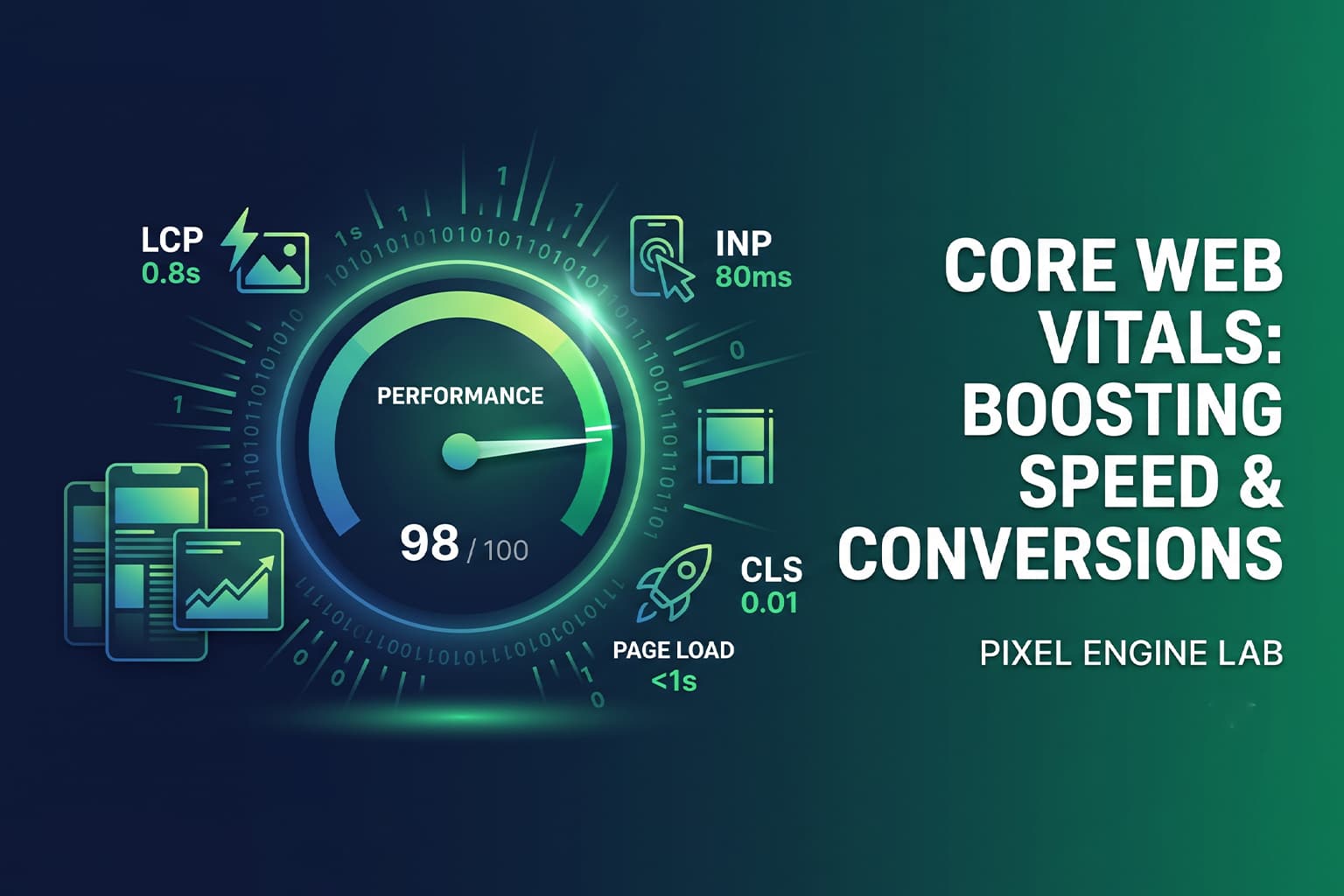
1. Understanding Core Web Vitals in 2026: LCP, CLS, and INP
Google evaluates user experience based on three essential user-centric performance metrics. Failing any of these signals directly hurts your organic search visibility:
- Largest Contentful Paint (LCP): Measures loading performance. Your main hero image or primary text block must render within 2.5 seconds of page load.
- Interaction to Next Paint (INP): Measures page responsiveness. When a user taps a button or mobile menu, the visual reaction must occur in under 200 milliseconds.
- Cumulative Layout Shift (CLS): Measures visual stability. Page elements should not jump around as images or fonts load asynchronously.
2. The Biggest Speed Killers (And How to Fix Them)
Most website speed issues come down to unoptimized media, heavy third-party tracking scripts, and uncompressed code bundles. Fixing these three bottlenecks yields immediate speed improvements:
A. Unoptimized Media & Heavy Image Formats
Serving raw PNG or JPEG files over 1MB severely degrades mobile performance. Always compress images and switch to modern WebP or AVIF formats. Ensure responsive images specify explicit width and height attributes to prevent CLS layout jumps.
B. Uncontrolled Third-Party Scripts
Adding multiple tracking pixels (Meta Ads, Google Tag Manager, live chatbots, heatmaps) bloats the browser's main thread. Defer non-critical scripts or load them off the main thread using web workers.
C. Dynamic Font & CSS Blocking
Loading multiple custom Google Font weights blocks initial rendering. Use font-display: swap; in your stylesheet to ensure text renders immediately using fallback system fonts while custom typography downloads in the background:
/* Optimization: Prevent layout shifts during custom font loading */
@font-face {
  font-family: 'Inter Custom';
  src: url('/fonts/inter.woff2') format('woff2');
  font-display: swap;
  font-weight: 400 700;
}
3. Optimizing Interaction to Next Paint (INP) for Mobile Users
High INP scores mean your page feels sluggish when users try to interact with it. Long JavaScript tasks block the browser from processing button taps or form submissions.
To fix INP, break up heavy JavaScript tasks into smaller asynchronous chunks and remove unnecessary re-renders. Minimizing client-side DOM manipulations ensures instant feedback when users click a call-to-action button.
Conclusion: Speed is Your Ultimate Competitive Advantage
A fast website creates a frictionless user experience that builds immediate trust, improves Google search rankings, and maximizes conversion rates across every marketing channel.
At Pixel Engine Lab, we build lightning-fast, high-converting websites optimized for top-tier PageSpeed scores and seamless Core Web Vitals performance.
Reach out to us today for a full website speed audit and custom optimization plan.