For decades, search engine optimization had one simple objective: rank in the top ten blue links on page one of Google. Today, search results look completely different. Google AI Overviews now appear at the top of search result pages, answering user queries directly before anyone scrolls down to traditional organic listings.
This shift has introduced a zero-click search environment where traditional click-through rates have dropped significantly. However, websites that earn inline source citations inside AI Overviews gain strong brand authority and high-intent traffic.
As a frontend developer and technical SEO specialist at Pixel Engine Lab, I will break down how AI Overviews select sources and the exact content and schema markup patterns you need to get cited.
1. How Google AI Overviews Select and Cite Sources
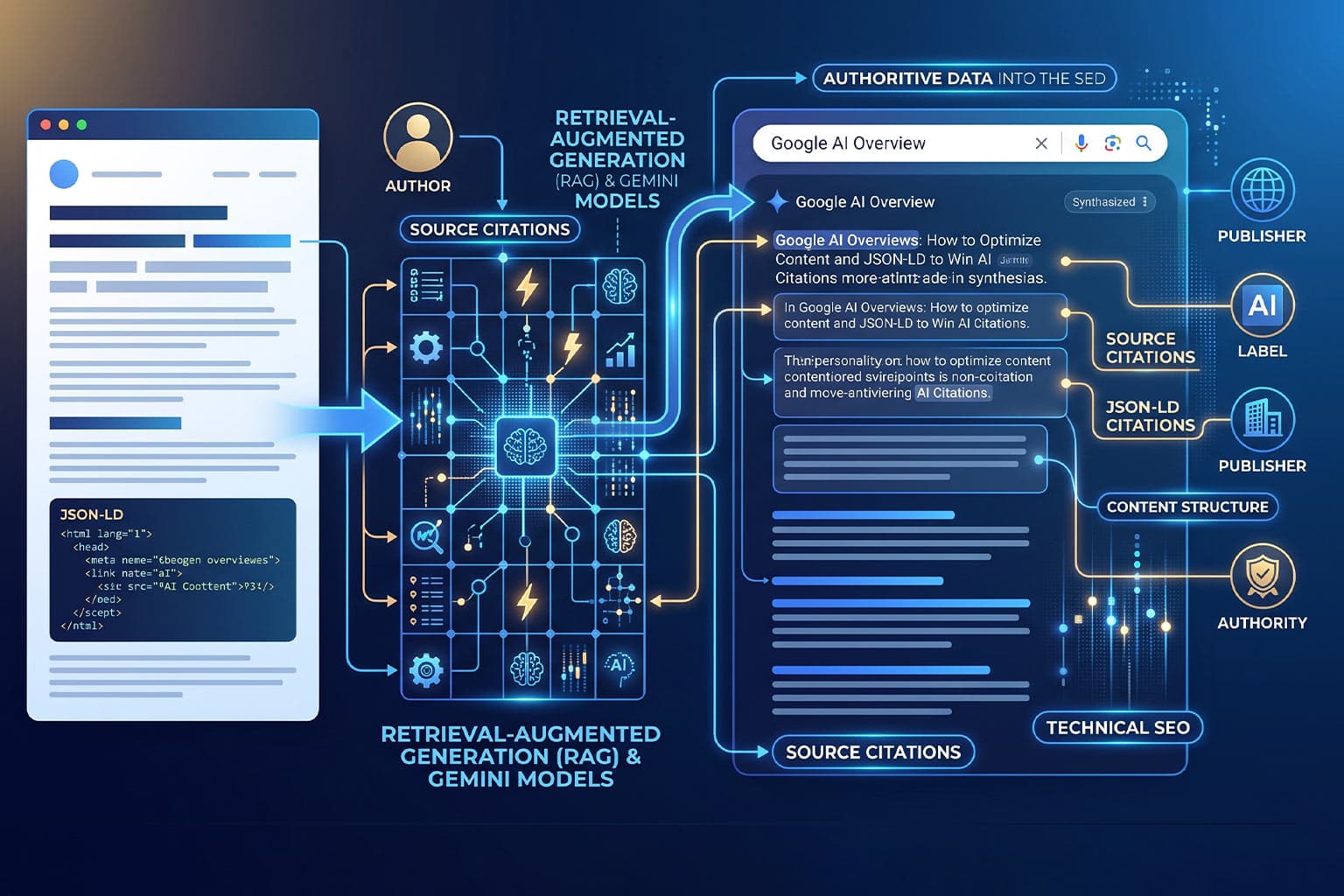
Google AI Overviews rely on Retrieval-Augmented Generation (RAG) powered by Gemini models. When a user enters a complex query, the search engine breaks it down into sub-queries, searches its live index, retrieves high-confidence passages, and synthesizes a direct answer with citations.
To qualify as a cited source, your content must satisfy three core conditions:
- Direct Passage Relevance: Clear, concise answers placed at the start of sections that resolve specific search intents without unnecessary fluff.
- Machine-Readable Structure: Clean semantic HTML with ordered lists, data comparison tables, and unambiguous headers.
- Verified Entity Data: Rich structured data (JSON-LD) that validates your authorship, publication dates, and organization credentials.
2. Content Formatting: The "Answer-First" Framework
AI bots scan web content looking for direct, extractable definitions and step-by-step solutions. You can increase your citation rate by using an answer-first layout:
- Lead with 40-60 Word Summaries: Place a definitive, bold answer immediately beneath every
<h2>before diving into detailed explanations. - Use Numbered Sequential Steps: AI models strongly prefer ordered lists for procedural queries (e.g., tutorials, technical setup guides).
- Add Structured Comparison Tables: Tables provide high-density facts that AI parsers can easily extract and quote.
3. Implementing Advanced JSON-LD Schema in Next.js
Structured data provides the machine-readable foundation that helps AI engines verify the facts on your page. The most reliable formats for AI citation eligibility are Article, FAQPage, and Organization schemas.
In Next.js App Router, you can inject structured data directly inside your page component using a script tag:
// app/blogs/[slug]/page.tsx
export default async function BlogPostPage({ params }) {
  const articleSchema = {
    "@context": "https://schema.org",
    "@type": "TechArticle",
    "headline": "Google AI Overviews Optimization Guide",
    "description": "How to format web content and structured data for AI Overviews citations.",
    "author": {
      "@type": "Person",
      "name": "Ankit Shukla",
      "url": "https://pixelenginelab.com/about-us"
    },
    "publisher": {
      "@type": "Organization",
      "name": "Pixel Engine Lab",
      "logo": {
        "@type": "ImageObject",
        "url": "https://pixelenginelab.com/logo.png"
      }
    },
    "datePublished": "2026-08-16",
    "dateModified": "2026-08-16"
  };

  return (
    <>
      <script
        type="application/ld+json"
        dangerouslySetInnerHTML={{ __html: JSON.stringify(articleSchema) }}
      />
      <article>
        {/* Main Content */}
      </article>
    </>
  );
}
4. Monitoring Your AI Search Presence
Track your AI citation performance over 60- to 90-day windows:
- Google Search Console: Monitor impressions and queries where organic CTR drops while brand search volume increases.
- Rich Results Test: Validate that your JSON-LD passes without warnings or missing entity fields.
- Query Fan-Out Testing: Test your target keywords in Google to see whether your brand domain is cited in the interactive source carousel.
Conclusion: Optimize to Be the Source, Not Just a Result
Google AI Overviews represent the future of search discovery. By combining direct, high-value writing with clean JSON-LD structured data, you position your website to be the trusted authority that AI systems cite.
At Pixel Engine Lab, we build high-speed Next.js web applications engineered for modern search engines and AI discovery systems.
Contact our team today for a comprehensive technical SEO and structured data review.